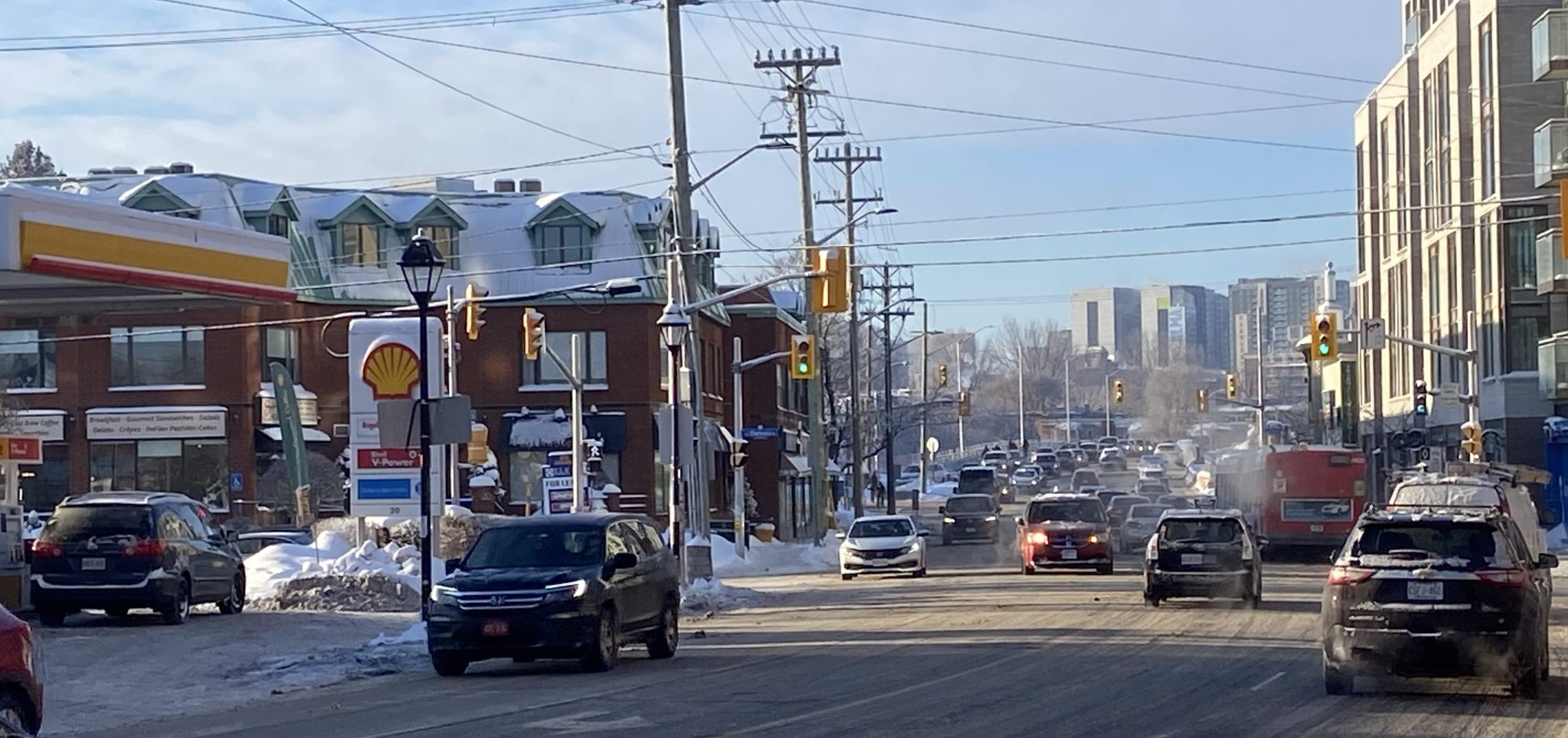
Ontario motorists covered by no-fault insurance
One of the more contentious issues in the 1987 election was the rising cost of automobile insurance. Toward the end of the campaign, the Premier mentioned that he had a plan to lower auto insurance premiums. Ultimately, the Ontario Motorist Protection Plan announced in 1990 delivered on that promise.
The Background
The need to address the automobile insurance regime arose out of rapidly increasing insurance rates in the mid-1980s that reflected the increasing economic prosperity of those years. A consequence of that prosperity was increased traffic on Ontario roads and a corresponding increase in accidents. The Report of Inquiry into Motor Vehicle Accident Compensation in Ontario delivered by Mr. Justice Coulter Osbourne in 1988 identified rapidly increasing costs for third-party liability bodily injury claims as the basis for the automobile insurance crisis that had developed.
Initial Steps
In response to the commitment made to address the level of automobile insurance rates during the election campaign of 1987, the Ontario Automobile Insurance Board was established in 1988 to set industry-wide premium rates for risk categories to be set by regulation, among other responsibilities. However, it became clear that the Board’s process would not adequately address the level of rates. It would also have resulted in certain dislocations, in part because the Board was mandated not to allow age, sex and marital status as risk classifications. As a result, the Board’s process was suspended and, under Murray Elston, who had become Minister of Financial Institutions in August 1988, other policy options were explored.
The Decision to Implement a No-Fault Regime
Ultimately, in 1990, the Government chose to restructure the automobile insurance regime in Ontario as a “threshold no-fault” regime.
Under the insurance regime at the time, an accident victim who was not at fault had to pursue a claim for damages for bodily injury in an automobile accident in the courts. However, success required, among other things, proof that the victim was not at fault and depended on the other driver having insurance that could pay.
With a threshold no-fault regime, an accident victim could claim against his or her own insurer for medical, rehabilitation and income replacement benefits up to specified limits regardless of whether the victim was at fault. However, the victim could only pursue an action in the courts for additional damages for bodily injury if the bodily injury exceeded a threshold which was expressed as resulting in death, permanent disfigurement or impairment. Determination of responsibility for the accident continued to be relevant, however, for liability for the costs of vehicle repair and for a driver’s insurance rates.
Three aspects of the process by which the new structure was arrived at deserve mention. First, the decision to maintain a private insurance regime rather than to move to a publicly run, single payer insurance system, as many proposed, reflected among other considerations a concern that such a system ran the risk of becoming an unnecessary subsidized drain on public resources whenever rates became a political issue.
Second, in this area, the American experience that rates could not be materially reduced under a private no fault system, to which many referred, was misleading. On closer examination, because the medical component of insurance expenses was already covered outside the insurance system under OHIP, it became clear that there was sufficient room to lower insurance rates while maintaining the right to sue for serious injuries – that is, injuries that exceeded the threshold – and to significantly enhance no-fault benefits for all accident victims.
Third, with the benefit of actuarial advice, confidential negotiations were conducted with a group of twenty insurers who represented the spectrum of drivers in the province in order to be satisfied that the level of rates upon implementation of the new system would meet the Government’s objective of lowering automobile insurance rates. In addition, meetings were held with a number of mutual insurers to understand their particular situations. Representatives of the property and casualty insurance brokers in the province, who were worried unnecessarily that their commissions would become a target for the reduction of insurance premiums, also provided their perspective on the options for reform.
The Principal Reforms to Automobile Insurance
The following were the most important changes made to the mandatory automobile insurance policy in the province under the legislation.
First, the legislation implemented a compromise – significantly increased no-fault benefits on the one hand and a limitation of the right to sue on the other. Actions in the courts for additional compensation would have to satisfy the threshold of “death, permanent serious disfigurement or permanent serious impairment of an important bodily function caused by continuing injury which was physical in nature”.
Second, the legislation significantly increased and broadened the no-fault benefits available to all accident victims, regardless of whether they were at fault in the accident and even if the party that caused the accident did not have automobile insurance. The no-fault benefits included medical benefits not provided by OHIP, rehabilitation benefits and income replacement benefits.
Third, mandatory mediation of disputes regarding an entitlement to no-fault benefits was required before commencement of any claim. In addition, in order to provide victims with an efficient alternative to the court system for adjudication of such disputes, an alternative dispute resolution system was instituted in the form of arbitration before a selected list of arbitrators under a procedure devised for the purpose.
Fourth, while the focus of the reform was on the impact of bodily injuries on the cost of insurance, the legislation also implemented certain reforms to the physical damage component of automobile insurance, primarily vehicle repair costs. The right to sue was removed but, to the extent another party was at fault, the party not at fault could claim against his or her insurer. A set of rules was established to allocate the physical damage costs between insurers based on the nature and cause of the accident.
Passage of the Legislation
The new system was introduced in the spring of 1990 and came into effect on June 21, 1990. It is also important to note that the new automobile insurance rate regime was introduced as part of a comprehensive plan of reforms announced as the Ontario Motorist Protection Plan. This Plan also involved a number of traffic safety measures and other legislative initiatives. Critically, the Plan in its entirety was announced by, and was supported by, all of the Ministers whose ministries had a role in matters addressed in the Plan and the Attorney-General.
The Plan was not, however, without its critics at the time. Opposition came from litigation lawyers reflecting a concern that that their practices would be significantly curtailed, which failed to materialize. The Conservatives and NDP both supported the litigation bar and opposed the proposed reforms because it reduced the right to sue. The tempestuous debate on the legislation included several days of filibuster by the opposition parties during which the NDP critic Peter Kormos, among others, filled the time by reading the names of individuals who opposed the legislation, ostensibly because they would lose the right to sue.
The Legacy of the Peterson Government
While each of the Conservatives and the NDP committed to restoring the pre-no-fault right to sue, neither did so when they were elected in later years. Although the NDP were also long-time proponents of public auto insurance and the Conservatives promised a restoration of the full right to sue in the courts for damages for bodily injury, both abandoned their respective positions when faced with the reality of the automobile insurance environment. Both parties chose instead to retain the no-fault insurance regime and to make modest amendments which added controversial complexity but retained the basic structure put in place by the Peterson Government.
The legacy of the reforms led by Minister Elston has been continuity of an automobile insurance system which has now served the drivers of Ontario well for over 35 years.